Not all carbon credits are equal. Some represent emissions avoided, some represent carbon stored for a few decades, and a few represent carbon removed from the atmosphere for centuries. Biochar is one of the most durable and measurable forms of carbon removal available today. Here is how it works and how it is verified.
Avoidance, removal and permanence
Carbon credits fall into two broad groups. Avoidance credits pay for emissions that would otherwise have happened, for example by protecting a forest or switching to renewable energy. Removal credits pay for carbon dioxide taken out of the atmosphere and stored. Climate scientists agree that reaching net zero will require large amounts of removal, alongside deep cuts in emissions, to balance emissions that are hard to eliminate.
Within removals, permanence matters. Carbon stored in a forest can return to the air in a fire, a drought or a change of land use. Carbon stored in soil organic matter can be lost if farming practices change. A removal that lasts for decades is worth less than one that lasts for centuries.
Why biochar carbon lasts
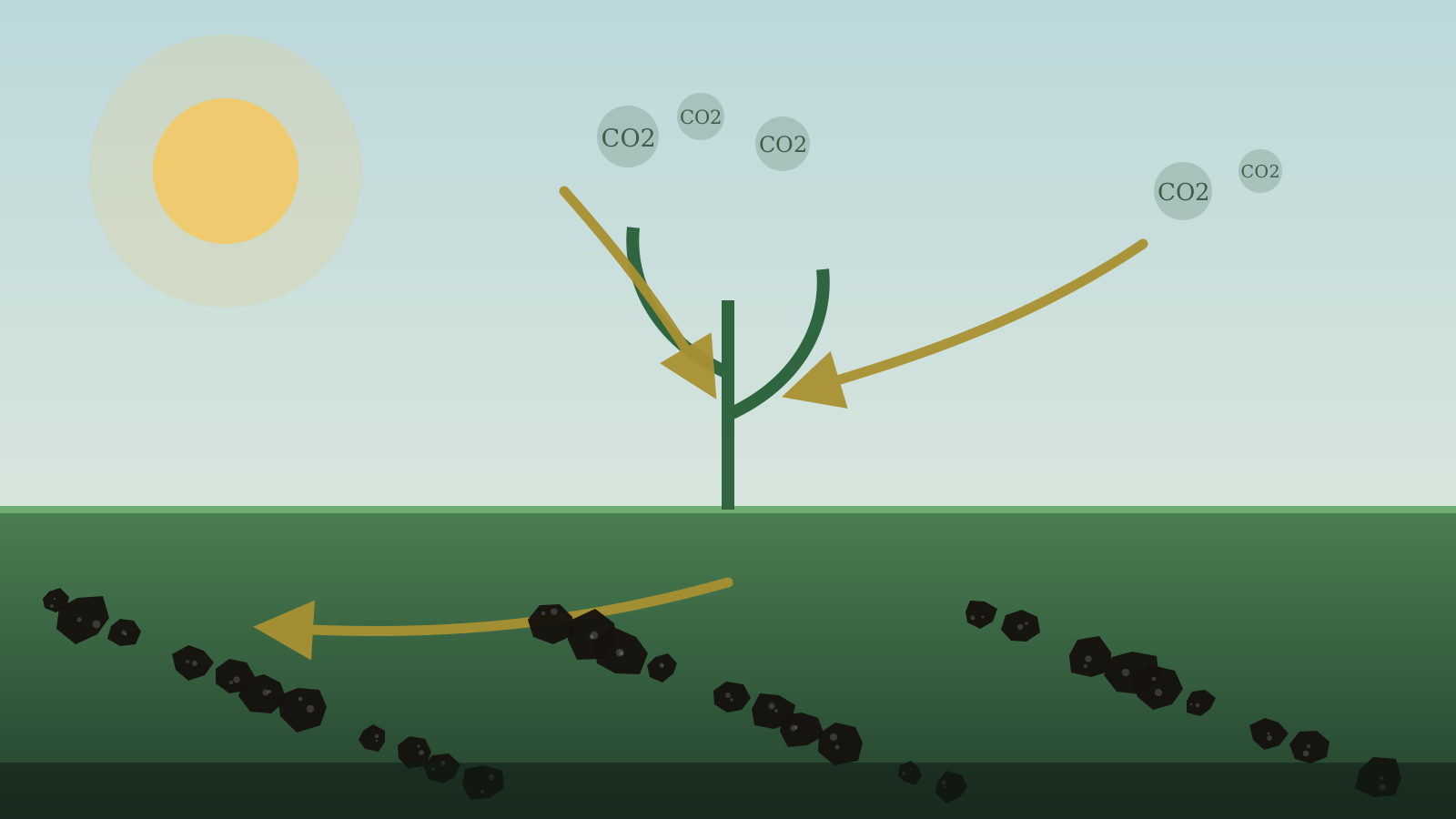
Plants pull carbon dioxide from the air as they grow. Left to rot or burned, that biomass returns its carbon to the atmosphere within months or years. Pyrolysis converts roughly a third to a half of the carbon in the biomass into biochar, in chemically stable ring structures that soil microbes struggle to break down. A meta-analysis of decomposition studies estimated the average residence time of biochar carbon in soil at several hundred years, and the most stable fraction persists far longer.
Stability can be measured. The ratio of hydrogen to organic carbon in biochar indicates how far pyrolysis has converted it into stable structures. Standards such as the European Biochar Certificate and the Puro.earth methodology use this ratio, with a maximum of 0.7, as a key test, and use it to estimate how much of the carbon will remain over a 100-year horizon.
Recognised by the IPCC
The Intergovernmental Panel on Climate Change (IPCC) includes biochar among the carbon dioxide removal methods assessed in its Sixth Assessment Report. Its 2019 refinement to the national greenhouse gas inventory guidelines added a method for countries to estimate the carbon stored when biochar is added to mineral soils. That recognition matters: it means biochar carbon removal can be counted in national climate accounting, not only in voluntary markets.
Measured and verified
A biochar carbon credit is calculated from measurements, not models of future growth. The producer records how much biochar is made, its carbon content and its stability. From the stored carbon, it deducts the emissions from the whole chain: harvesting and transporting feedstock, running the plant, and delivering the biochar. The result is the net carbon dioxide removed.
Under the Puro.earth standard, the result is issued as CO2 Removal Certificates (CORCs). One CORC represents one metric ton of carbon dioxide removed from the atmosphere. Production facilities are audited by independent third parties, feedstock must be sustainable, and the biochar must be used in a way that keeps its carbon stored, such as in soil, compost or construction materials, not burned as fuel.
From feedstock to credit, step by step
The chain starts with the biomass: its source and quantity are recorded, and the standard checks that it is sustainable, for example residue or invasive species rather than wood from cleared forest. At the plant, the producer records how much biomass goes in and how much biochar comes out, along with the energy used and any emissions from the process. Samples of each production batch go to a laboratory for carbon content, the hydrogen-to-organic-carbon ratio and contaminant tests.
The biochar is then sold and applied, and the producer documents where it went and how it was used, so that it can be shown that the carbon is stored and not burned. An independent auditor checks the facility, the records and the calculations. Only then are credits issued on the registry, each with its own serial number. When a company buys and retires those credits to offset its emissions, the registry records that they have been used, so no one else can claim the same ton.
How it works at Sainya Krishi
At Sainya Krishi, each ton of biochar removes about 1.8 tons of carbon dioxide equivalent for the long term, which earns 1.8 Carbon Removal Certificates under the Puro.earth biochar methodology. Our carbon removal is verified with our partner Aavishkaar Carbon. The feedstock is mainly invasive Prosopis Juliflora and agricultural residue: biomass that would otherwise be cleared and burned, or left to decay.
Stacked with soil benefits
Most carbon removal methods do only one thing. Biochar removal also improves the land it goes into: better water retention, nutrient efficiency and soil biology, and lower nitrous oxide emissions from fertilized fields. For buyers of carbon credits, this co-benefit is part of the appeal: the removal is tied to a physical product that improves farmland and farm incomes, with a traceable chain from feedstock to field.
What buyers should check
If you are buying biochar carbon removal, ask which standard the credits are issued under and whether the facility has been independently audited. Ask what the feedstock is and how its sustainability is ensured, what the biochar is used for, and how the life-cycle emissions are deducted. Credits issued on a public registry, with serial numbers that are retired when you claim them, prevent double counting.
Buyers should also ask for evidence of what happens to the biochar after it leaves the plant. Credits are most credible when the producer can show where the biochar was applied, in which quantities and for what purpose, because that is what guarantees that the carbon is actually stored. A producer that sells biochar to farms it works with directly, and keeps records of each delivery, can provide this traceability from feedstock to field. Price matters too: unusually cheap removal credits often reflect weak verification or optimistic assumptions.
The limits to keep in mind
Biochar carbon removal is durable, but it is not unlimited. Its scale depends on the supply of sustainable biomass, and biomass grown specifically for biochar on land that could grow food or forest would undo much of the benefit. That is why standards require sustainable feedstock and why residues and invasive species, which have no better use, are the strongest feedstocks.
Durability is also estimated, not guaranteed forever. The 100-year stability factors used in carbon accounting are conservative estimates from laboratory and field studies. Biochar carbon is far more stable than soil organic matter or most forests, but buyers should understand that credits are calculated on that basis. Finally, carbon removal does not replace emissions cuts: credible climate plans cut emissions first and use removals for what cannot yet be cut.
Why the farm matters in carbon removal
Because most biochar ends up in fields, carbon removal and farming are tied together. A farmer who uses biochar is storing carbon for the long term while improving soil, and the carbon credit revenue earned on the biochar helps make that biochar affordable. For India, where soils are short of carbon and farm budgets are tight, that link is one of biochar's biggest advantages.
Sources and further reading
Wang, J., Xiong, Z. & Kuzyakov, Y. (2016). Biochar stability in soil: meta-analysis of decomposition and priming effects. GCB Bioenergy 8, 512–523.
Woolf, D., Amonette, J. E., Street-Perrott, F. A., Lehmann, J. & Joseph, S. (2010). Sustainable biochar to mitigate global climate change. Nature Communications 1, 56.
IPCC (2022). Climate Change 2022: Mitigation of Climate Change. Working Group III contribution to the Sixth Assessment Report (chapters on carbon dioxide removal).
IPCC (2019). 2019 Refinement to the 2006 IPCC Guidelines for National Greenhouse Gas Inventories, Volume 4, Appendix 4: method for estimating the change in mineral soil organic carbon stocks from biochar amendments.
Puro.earth: Biochar Methodology (Puro Standard) for issuing CO2 Removal Certificates (CORCs).
European Biochar Certificate (EBC): Guidelines for a sustainable production of biochar. Carbon Standards International.
Borchard, N., Schirrmann, M., Cayuela, M. L. et al. (2019). Biochar, soil and land-use interactions that reduce nitrate leaching and N2O emissions: a meta-analysis. Science of the Total Environment 651, 2354–2364.
Sourcing biochar in bulk?
Talk to our team about grades, volumes and export.