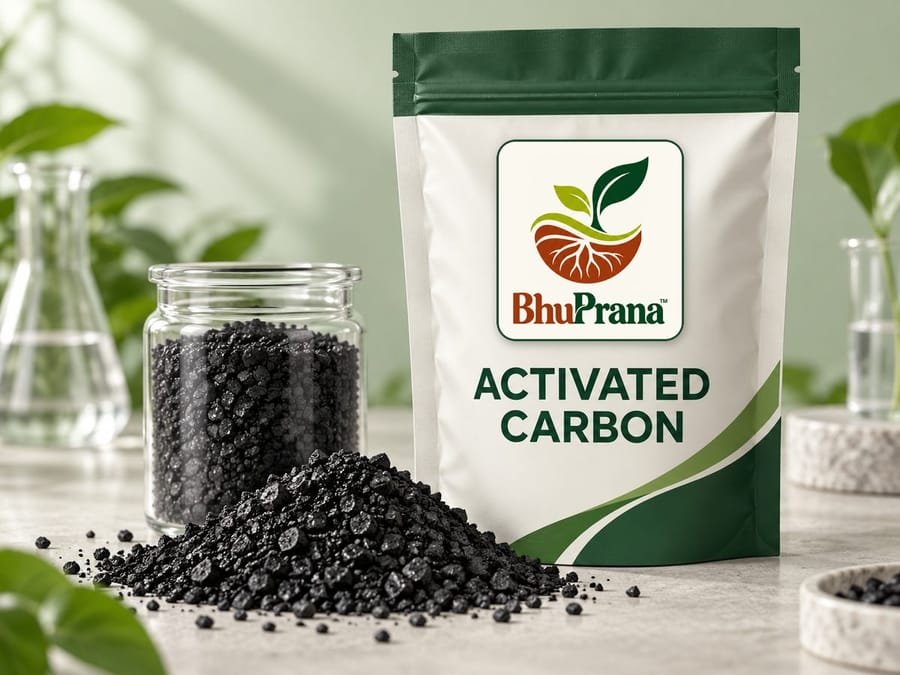
Activated Carbon (High-Purity)
Our activated carbon line takes graded biochar through a steam-activation step to unlock very high surface area for adsorption. India is a net importer of activated carbon, and biochar-derived grades command a strong premium over raw biochar. Currently in pilot development toward commercial supply.
check_circle Key Benefits
Applications
Industries Served
Specifications
Packaging
25 kg bags and drums (planned).
Bulk Supply
Register interest for pilot-batch and offtake discussions.
From biochar to activated carbon
Activated carbon is carbon processed to have an extremely large internal surface, so that it can trap contaminants from water, air and process streams by adsorption. Biochar already has a porous structure; activation opens and extends those pores. We are developing a steam-activated grade made from our graded Prosopis Juliflora biochar: hot steam reacts with the carbon and etches out a dense network of fine pores, without the strong acids or alkalis used in chemical activation.
This product is in pilot development. We are not yet taking commercial orders, but we welcome pilot-batch and offtake discussions.
Where it is used
Activated carbon is used to remove colour, odour, chlorine and organic contaminants from drinking water and industrial effluent; to capture volatile organic compounds and odours from air and gas streams; to purify chemicals, sugar and edible oils; and in gold recovery and many other industrial processes. India imports a significant share of the activated carbon it uses, which makes a domestic, biomass-based supply attractive.
What buyers specify
Activated carbon is bought against a specification, not a name. The figures most buyers ask for are the iodine number, a measure of fine pore volume and adsorption capacity; BET surface area; particle size or mesh; hardness and abrasion resistance for granular grades; ash and moisture content; and pH. Water-treatment buyers may also ask about leachable metals. As our pilot grades mature, we will publish these figures and supply test reports with samples.
Why make it from biochar
Most activated carbon is made from coal or coconut shell. Making it from biochar produced from an invasive species and agricultural residue gives a renewable raw material with a low carbon footprint, close to where it is used. The same continuous pyrolysis plant that makes our soil biochar produces the base material, so the activated grade builds on a process we already run every day.
Working with us
If you buy activated carbon today, tell us your application, the specification you buy against and your monthly volume. That helps us target pilot batches at real requirements, and gives you an early look at a locally made alternative. Planned packaging is 25 kg bags and drums.
Sources and further reading
Lehmann, J. & Joseph, S. (eds.) (2015). Biochar for Environmental Management: Science, Technology and Implementation, 2nd edition. Routledge.
Frequently asked questions
Can I buy activated carbon from you now?
Not yet. The product is in pilot development. Send an enquiry to discuss pilot batches or future offtake.
What is the difference between biochar and activated carbon?
Activated carbon is carbon that has been further processed, in our case with steam, to greatly increase its internal surface area so it can adsorb contaminants. Biochar is used mainly in soil; activated carbon is used mainly for purification.
Why steam activation?
Steam activation uses only heat and water vapour, with no strong acids or alkalis, so there are no chemical residues to wash out or dispose of.
What specifications will you publish?
The figures buyers usually specify: iodine number, surface area, particle size, hardness, ash, moisture and pH. They will come with test reports on pilot samples.